Best Soft Plastics for Trout (What Actually Gets More Bites + Worm Setup Guide)
Best soft plastics for trout means matching color, size, jig head weight, and rigging to conditions — not chasing whatever bait is trending, but building a complete system around how trout actually behave.
Best Soft Plastics for Trout: Building the Complete System
This is the central trout fishing resource on Family Fishin. Every trout article on this site connects back to the principles outlined here — color visibility, fall rate control, material softness, presentation mechanics, and seasonal adjustment.
If you understand this page, you understand the trout system.
If you are specifically fishing Missouri trout parks, Ozark streams, or Lake Taneycomo, see our complete Missouri Trout Fishing Guide covering trout parks, local tactics, seasonal behavior, stocked trout pressure, and what consistently works in Missouri water conditions.
Recommended Trout Setup (Start Here)
If trout are following but not biting, this setup fixes one of the most common issues:
- Ribbed trout worm (maintains natural movement at slow speeds)
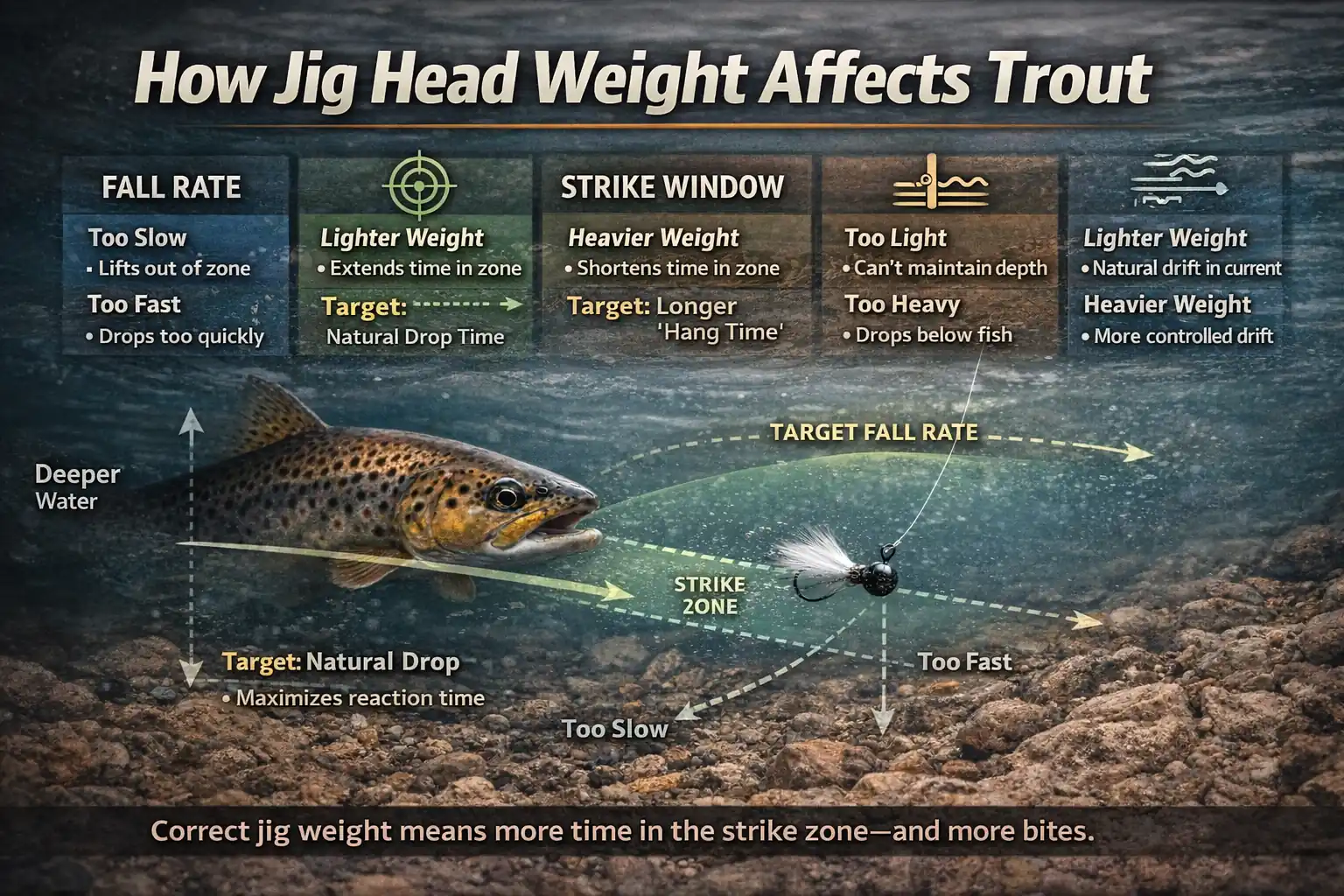
- 1/100–1/64 oz jig head (controls fall rate, strike window, and depth control) → How Jig Head Weight Affects Trout
- Slower, controlled retrieve
Most soft plastics lose movement when slowed down. Ribbed worms stay active, which is why they consistently turn follows into strikes.
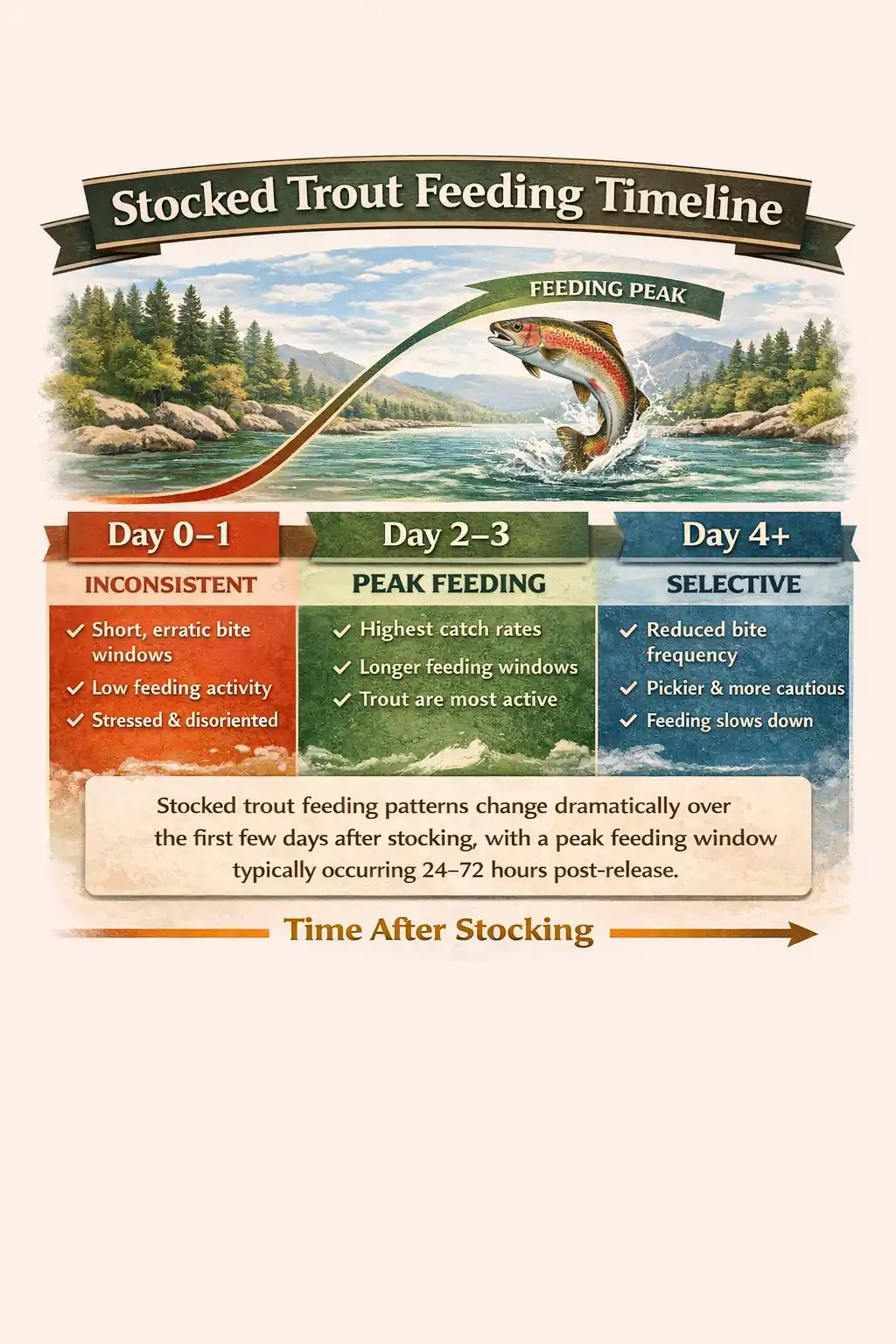
Stocked Trout Behavior (First 72 Hours)
Stocked trout behave differently than established fish, especially immediately after stocking. Their feeding, movement, and positioning follow predictable patterns that most anglers overlook.
Many of these pressure patterns become especially visible in Missouri trout parks during heavy stocking periods and opening-week fishing pressure.
How to Choose the Best Soft Plastics for Trout
Trout fishing with soft plastics and marabou jigs is not random. Success comes from understanding how visibility, movement, depth, and pressure interact under real water conditions.
Movement is heavily influenced by retrieve speed. Learn how speed changes trout behavior and affects strike conversion: → Retrieve Speed for Trout Fishing
Most anglers change colors or weights based on instinct. Consistent trout anglers adjust based on measurable variables: water clarity, light penetration, depth, temperature, fishing pressure, and material performance.
Depth control is heavily influenced by jig head weight. → How to Choose Jig Head Weight for Trout
If trout are following your bait but not committing, it means one or more of these variables is slightly off. → Why Trout Follow But Don’t Bite (And How to Fix It)
Size plays a major role in how trout respond to soft plastics. → Best Trout Worm Sizes (When Size Matters)
Material choice directly affects how your bait moves in the water. → Marabou vs Soft Plastics for Trout
Visibility is controlled by water clarity. → How Water Clarity Affects Trout Fishing
Material softness plays a major role in whether a bite turns into a hooked fish. → How Softness Affects Hookup Ratio
Most anglers adjust color or weight first, but that’s rarely the real issue. When trout are inspecting your bait, the problem is usually how it moves at slow speeds. Standard plastics often lose action when slowed down. That’s why ribbed trout worms consistently outperform — they stay active even when barely moving.
1. Trout Color Strategy: Visibility Before Preference
Color selection for trout begins with visibility — not personal confidence in a specific shade.
Four primary variables determine how trout perceive a lure: water clarity, light penetration, depth, and background contrast.
In clear water, trout inspect baits longer. Natural translucent tones and subtle contrast often outperform loud, opaque colors.
In stained or runoff conditions, silhouette and contrast become more important than exact color name. As depth increases, certain colors lose visibility faster due to light filtration. Red tones fade first, while darker silhouettes often remain visible at depth.
2. Seasonal Trout Strategy
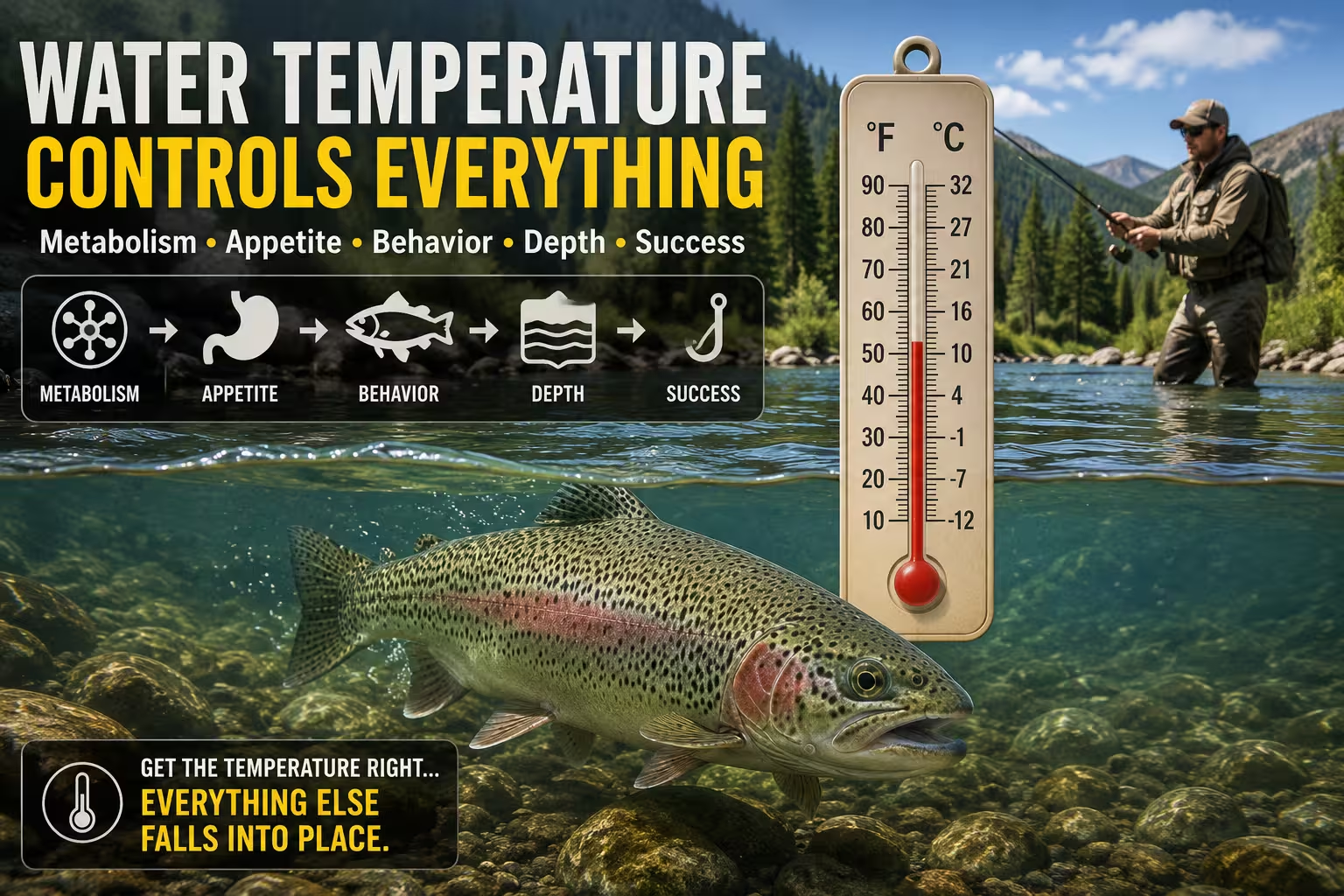
Trout behavior changes significantly throughout the year. Temperature shifts influence metabolism, depth positioning, and feeding intensity.
Spring
Spring often includes stocking events and fluctuating clarity from runoff. Trout may feed aggressively but can also become conditioned quickly under pressure.
Summer
Higher water temperatures push trout deeper or into shaded zones. Depth control and natural presentation become more important than aggressive movement.
Fall
Cooling water often increases movement and feeding consistency. Fish may hold shallower and respond well to balanced contrast.
Winter
Low metabolism and reduced light penetration demand slower presentations, darker silhouettes, and efficient hook exposure.
3. Stocked vs Established Trout
Recently stocked trout behave differently than fish that have adapted to natural forage.
Freshly stocked trout react quickly to movement, feed opportunistically, and may respond well to visible or high-contrast colors.
As fishing pressure increases, trout inspect baits longer, subtle presentation becomes more important, and natural tones outperform bold, unnatural contrast.
Understanding this shift prevents overusing aggressive colors once fish become conditioned.
Egg-style baits are one of the most consistent tools for targeting stocked or opportunistic trout. Their bright color, compact profile, and natural drift make them easy for fish to recognize and intercept in current. Synthetic versions also solve many of the problems associated with natural eggs by staying on the hook longer and maintaining consistent size and buoyancy.
4. Marabou vs Soft Plastic for Trout
Both tools serve specific purposes. Choosing between marabou and soft plastics is not about preference — it’s about how each material behaves in the water and how trout respond to that movement.
→ When to Use Marabou vs Soft Plastics for Trout (When to Use Each for More Strikes)
Marabou Jigs
Marabou provides natural micro-movement. Fibers pulse with minimal water movement. Advantages: passive movement at slow speeds, strong performance in cold water, subtle action without rod input.
Soft Plastics
Soft plastics provide engineered control. You can tune fall rate, profile, density, and collapse speed. They excel when precision depth control or durability is needed.
In cold, slow conditions, marabou often excels. In deeper water or when targeting specific fall rates, soft plastics provide more predictable performance.
5. Jig Head Selection & Fall Rate Control
Jig head weight directly influences sink speed, strike window, drift stability, and hook exposure timing.
Choosing the correct jig head weight is what controls fall rate and determines how long your bait stays in the strike zone. If your weight is wrong, trout may follow but not commit.
Most anglers focus only on sink speed, but jig weight also affects drift behavior, reaction time, and how naturally trout track the bait underwater.
→ How Jig Head Weight Affects Trout
→ How to Choose Jig Head Weight for Trout
- Too heavy: Kills natural movement, reduces time in strike zone
- Too light: Fails to reach holding depth, drifts unnaturally
Balancing jig head weight with plastic softness and water depth creates predictable fall rate — which often matters more than color.
6. Rigging Methods for Trout Worms
Presentation technique can override color. Common trout worm methods include:
- Under a Float: Controls depth precisely and allows subtle drift presentation.
- Vertical Jigging: Effective in ponds and deeper lakes where trout suspend.
- Bottom Drift: Works well in moving water with controlled tension.
- Slow Swim Retrieve: Triggers reaction bites from cruising fish.
Each method changes how softness, tail action, and density behave underwater.
Trout worm size directly affects how fish perceive and commit to your bait. If the profile is too large or too small, trout will often follow without striking. → Best Trout Worm Sizes (When Size Matters)
Retrieve speed is one of the most important presentation variables — too fast or too slow can cause trout to follow without striking. → Retrieve Speed for Trout Fishing: How It Changes Behavior
7. Clear Water vs Stained Water Adjustments
Clear Water
- Use translucent tones
- Reduce excessive flash
- Match forage coloration
- Consider lighter jig heads
Stained Water
- Increase silhouette
- Use stronger contrast
- Consider UV reflectance in low light
- Maintain consistent depth control
Water clarity determines how trout see your bait, how long they inspect it, and whether they commit or refuse. If visibility is wrong, even the right lure will fail. → How Water Clarity Affects Trout Fishing (And How Trout See Your Lure)
8. Soft Plastic Material Performance
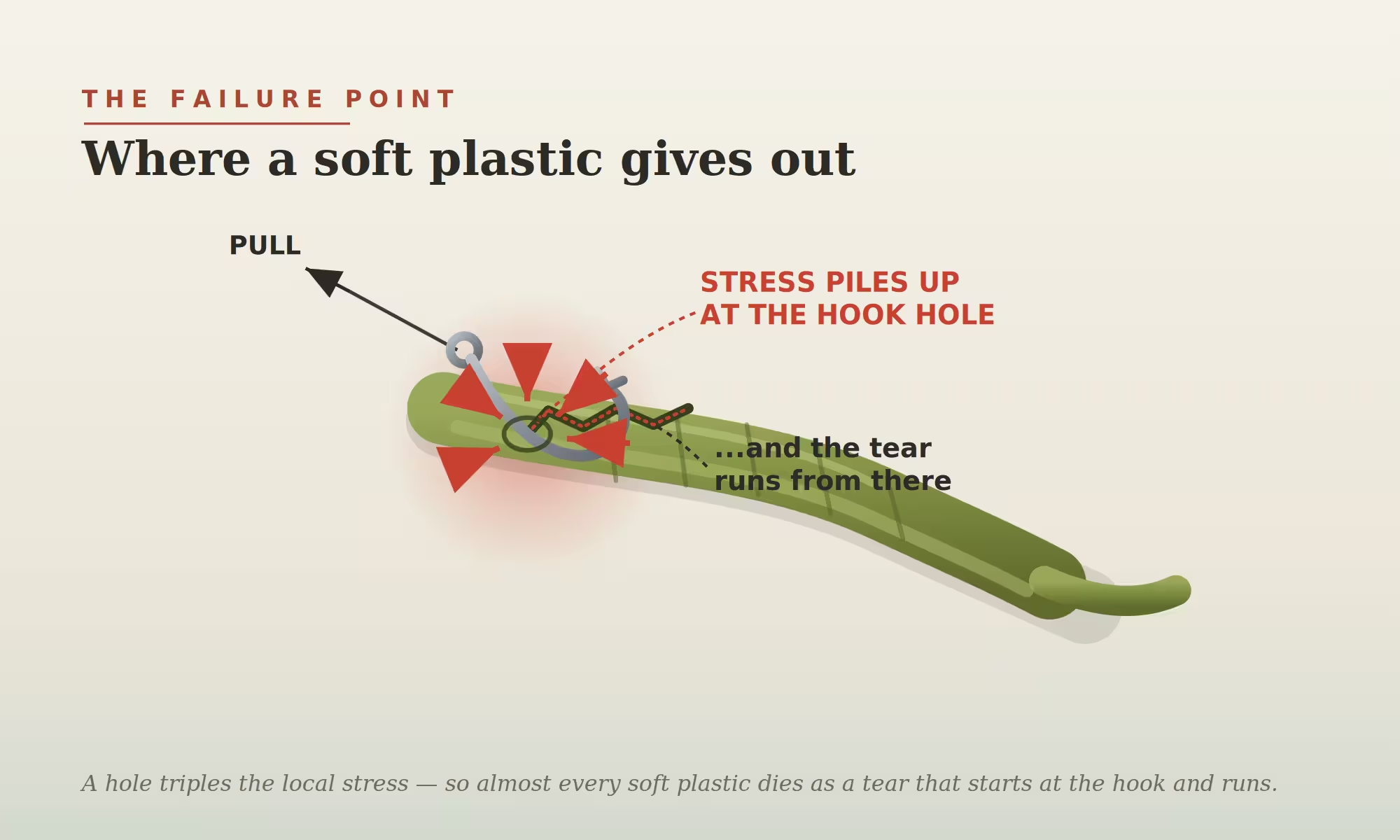
Soft plastic formulation affects more than durability. Material properties influence: collapse rate during bite, hook exposure speed, fall rate consistency, and strike-to-hookup conversion.
- Softer compounds: Collapse faster, improve hook penetration, tear more easily
- Firmer compounds: Increase durability, hold geometry under load, reduce subtle movement
Performance is always a controlled trade-off.
Material softness directly affects how easily the hook penetrates and how long trout hold onto the bait. If the bait is too stiff, fish may strike but not get hooked. → How Softness Affects Hookup Ratio
Subsurface Imitations: Stoneflies & Nymph Profiles
When trout are feeding near the bottom or holding tight to structure, realistic insect imitations often outperform larger soft plastics.
Building a Complete Trout System
Trout success is not about one variable. It is about balancing: color visibility, water clarity, depth, material softness, jig head weight, presentation style, and fishing pressure.
Every trout guide on this site connects back to these mechanics. Use this page as your central navigation point for building a structured trout system instead of relying on random adjustments.
When trout follow but don’t strike, it’s not random — it’s feedback that one part of your system is off. → Why Trout Follow But Don’t Bite
Frequently Asked Questions About Trout Soft Plastics & Jigs
What is the best soft plastic for trout?
The best soft plastics for trout are usually small finesse baits between 1 and 3 inches long. Worm-style plastics, micro swimbaits, and small grubs consistently produce bites because they imitate insects, larvae, and small baitfish trout commonly feed on. Matching bait size, fall rate, and presentation to water conditions usually matters more than the exact lure shape.
What color soft plastics work best for trout?
The best color depends on water clarity and light conditions. In clear water, natural translucent colors like smoke, clear, olive, and light brown often perform best. In stained water or low light, brighter colors such as chartreuse, pink, white, or orange create stronger contrast and help trout locate the bait.
How do you rig soft plastics for trout?
Soft plastics are most commonly rigged on small jig heads between 1/64 oz and 1/16 oz. Anglers fish them using several presentations including drifting under a float, slow swimming retrieves, vertical jigging, or natural bottom drifts in current. The key is maintaining a natural presentation that keeps the bait in the strike zone.
What size soft plastics should you use for trout?
Most trout anglers use soft plastics between 1 and 3 inches long. Smaller profiles produce more consistent bites because they resemble the insects and small forage trout commonly feed on.
What jig head weight should I use for trout?
Common jig head weights for trout range from 1/64 oz to 1/16 oz depending on water depth and current speed. Lighter jig heads create a slower fall and more natural drift, while heavier heads help reach deeper water or maintain control in faster current.
Are marabou jigs better than soft plastics?
Marabou jigs excel in cold water or when trout are inactive because the fibers move naturally with very little rod movement. Soft plastics provide better depth control, profile options, and fall-rate tuning when targeting specific conditions.
Do trout eat egg baits?
Yes. Egg baits are extremely effective for stocked trout and opportunistic feeders in rivers and tailwaters. Their bright color and compact profile make them easy for fish to locate and intercept in current.
Do trout see UV lures?
Trout can detect UV reflectance, which may increase visibility in certain water conditions. However, UV alone does not guarantee more bites. Presentation, depth control, and natural drift typically matter more than UV visibility.