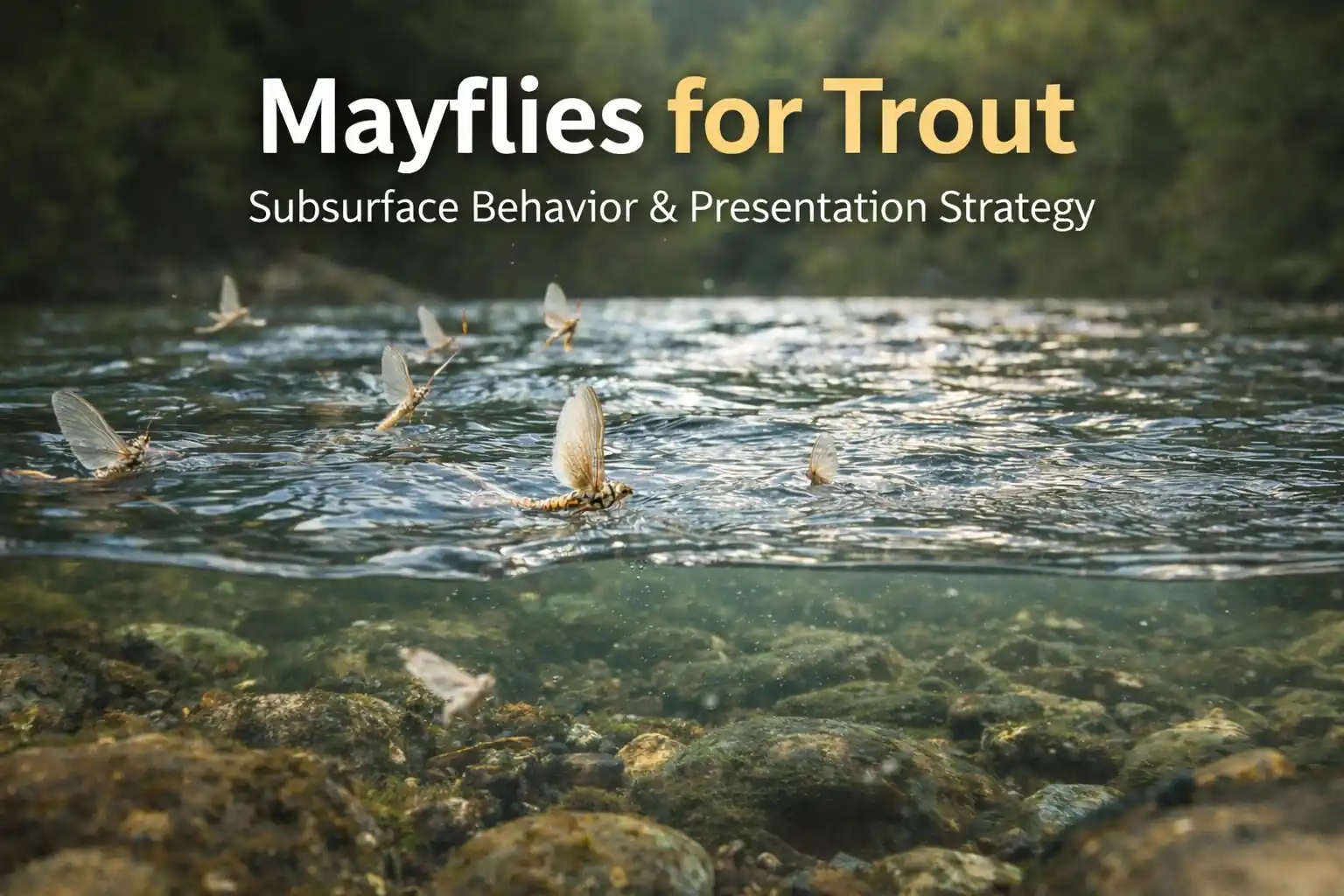
Mayflies for Trout: Subsurface Behavior & Presentation Strategy
Why Mayflies Matter to Trout
Mayflies are one of the most important food sources for trout in rivers, streams, and tailwaters. While anglers often focus on visible surface hatches, most of a mayfly’s life is spent underwater as a nymph. Understanding how mayflies behave below the surface — and how trout respond to that behavior — is the key to consistent success outside of peak hatch windows.
The Mayfly Lifecycle: Mostly Subsurface
Mayflies undergo a complete lifecycle: Egg → Nymph → Emerger → Dun (adult) → Spinner. The nymph stage lasts the longest. During this time, mayflies live along the stream bottom in riffles, seams, and slower current edges. For trout, mayfly nymphs are available year-round — not just during hatch events.
Where Mayfly Nymphs Live
- Clinger nymphs: Hold tight to rocks in fast water
- Swimmer nymphs: Move through moderate current
- Burrower nymphs: Live in silty or sandy bottoms
Trout position themselves accordingly. In clear or pressured water, trout often feed close to the bottom, targeting drifting nymphs that become dislodged in current. Matching depth and drift are more important than matching color perfectly.
When Trout Feed on Mayflies
- During nymph drift before a hatch
- During emergence as insects rise in the water column
- After hatches when nymphs continue drifting subsurface
Outside of visible surface feeding, most mayfly feeding activity happens underwater. This is why subsurface presentations consistently produce fish even when no hatch is visible.
Subsurface Presentation Strategy
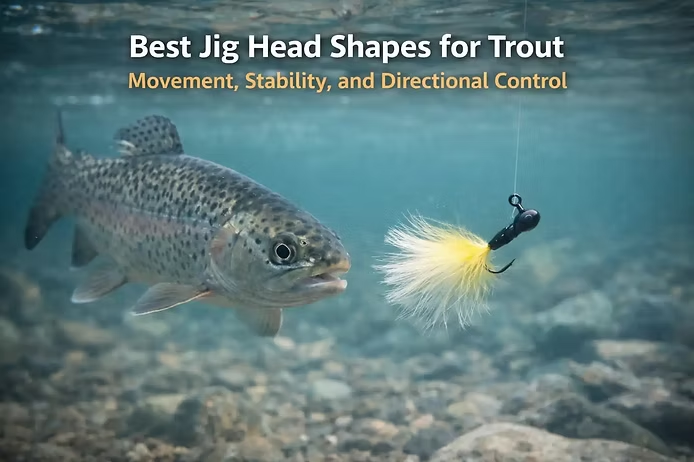
Successful mayfly imitation depends on: proper depth control, natural drift speed, compact and realistic profile, and subtle movement. In fast water, trout expect insects to drift naturally with current — lures that move too quickly or vibrate excessively get refused. The goal is controlled drift, not speed.
For Fly and Spin Anglers
Fly anglers traditionally imitate mayflies using weighted nymph patterns fished near the bottom or suspended under indicators. Spin anglers can apply the same subsurface principles using compact soft plastic nymph-style profiles rigged on lightweight jig heads — a properly weighted setup allows precise bottom contact while maintaining a natural drift through seams and riffles.
Mayflies vs Stoneflies: Key Differences
- Stoneflies: Larger, crawl along bottom — imitations emphasize bottom contact and crawling movement
- Mayflies: Smaller, drift more freely — imitations prioritize controlled drift and subtle mid-column presentation
FAQ
Do trout feed on mayflies underwater?
Yes. Most mayfly feeding happens below the surface during the nymph stage. Outside of visible hatch periods, trout commonly feed on drifting nymphs near the bottom.
Do trout only eat mayflies during a hatch?
No. Trout feed on nymphs throughout the year, even when no hatch is visible.
How should you present a mayfly imitation to trout?
Depth control and natural drift matter more than speed. A properly weighted presentation that drifts naturally with the current produces the most consistent results.
For the full trout fishing system, see → Best Soft Plastics for Trout: Complete Guide to Color, Rigging & Performance.