.webp)
Fishing Lure Color Contrast Explained: Why Fish Strike Some Soft Plastic Colors and Ignore Others
- Rodney Abel
- Jan 12
- 1 min read

Updated: Feb 12
Part 2
Understanding fishing lure color contrast helps explain why some soft plastic lures stand out instantly while others blend into the background and get ignored, especially in low-visibility conditions
Contrast is the ability of a bait to stand out from its background. It matters more than color name, brand, or flake pattern.
If a fish can’t separate your bait from its surroundings, it won’t strike.
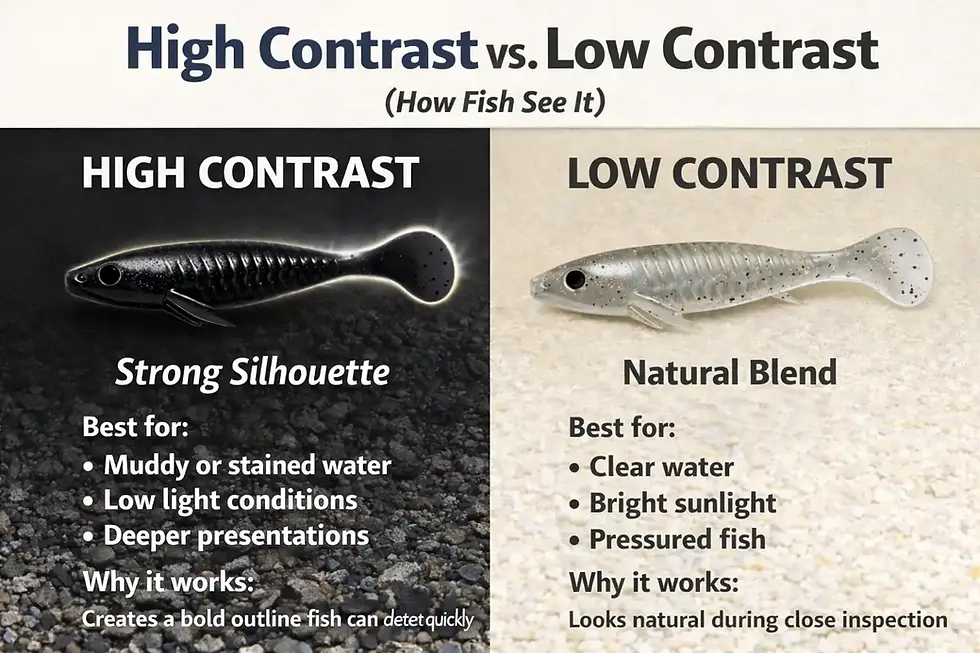
High Contrast vs Low Contrast
High contrast makes a bait easier to detect.
Low contrast makes a bait appear more natural.
Neither is “better”—they work in different conditions.
When to Use High Contrast Colors
Best for:
Muddy or stained water
Low light conditions
Deeper water
Examples:
Black
Junebug
Solid dark laminates
These colors create strong silhouettes even when color detail disappears.
When to Use Low Contrast Colors
Best for:
Clear water
Bright sunlight
Pressured fish
Examples:
Smoke
Watermelon
Translucent green pumpkin
These reduce unnatural visibility and help prevent refusals.
What’s Next
In Part 3, we’ll explain why some colors fade underwater and why red doesn’t stay red for long.


Comments