How Stocked Trout Find Food: Vision, Smell, and Feeding Behavior Explained
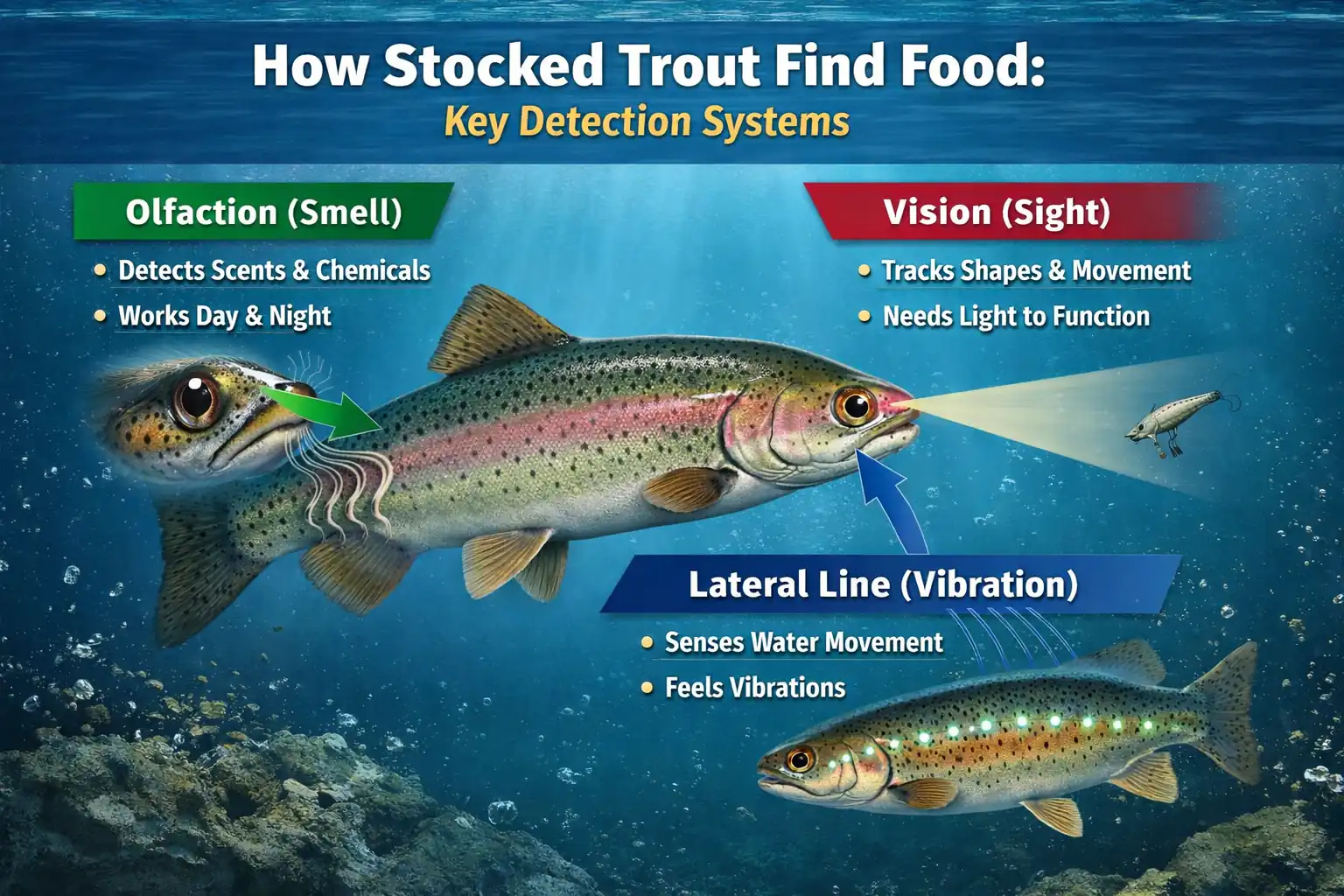
How stocked trout find food comes down to detection, not hunger — smell, vision, and lateral line sense work together, and which one dominates changes with how long trout have been in the water.
How Stocked Trout Find Food: The Sensory Hierarchy
Part 3 — Vision, Smell, and Vibration as Feeding Control Systems
This article is part of our complete trout system — see the full breakdown in our best soft plastics for trout guide.
1. Feeding Is Controlled by Detection, Not Hunger
Stocked trout do not feed continuously based on hunger alone. Feeding behavior is controlled by what they can detect and confirm as food. Three primary detection systems: olfaction (smell), vision, and lateral line (vibration detection). Each system dominates under different conditions. Core Principle: Trout only eat what they can detect, identify, and confirm. Failure in any step reduces strike probability.
2. Olfaction (Smell): The Primary System Early On
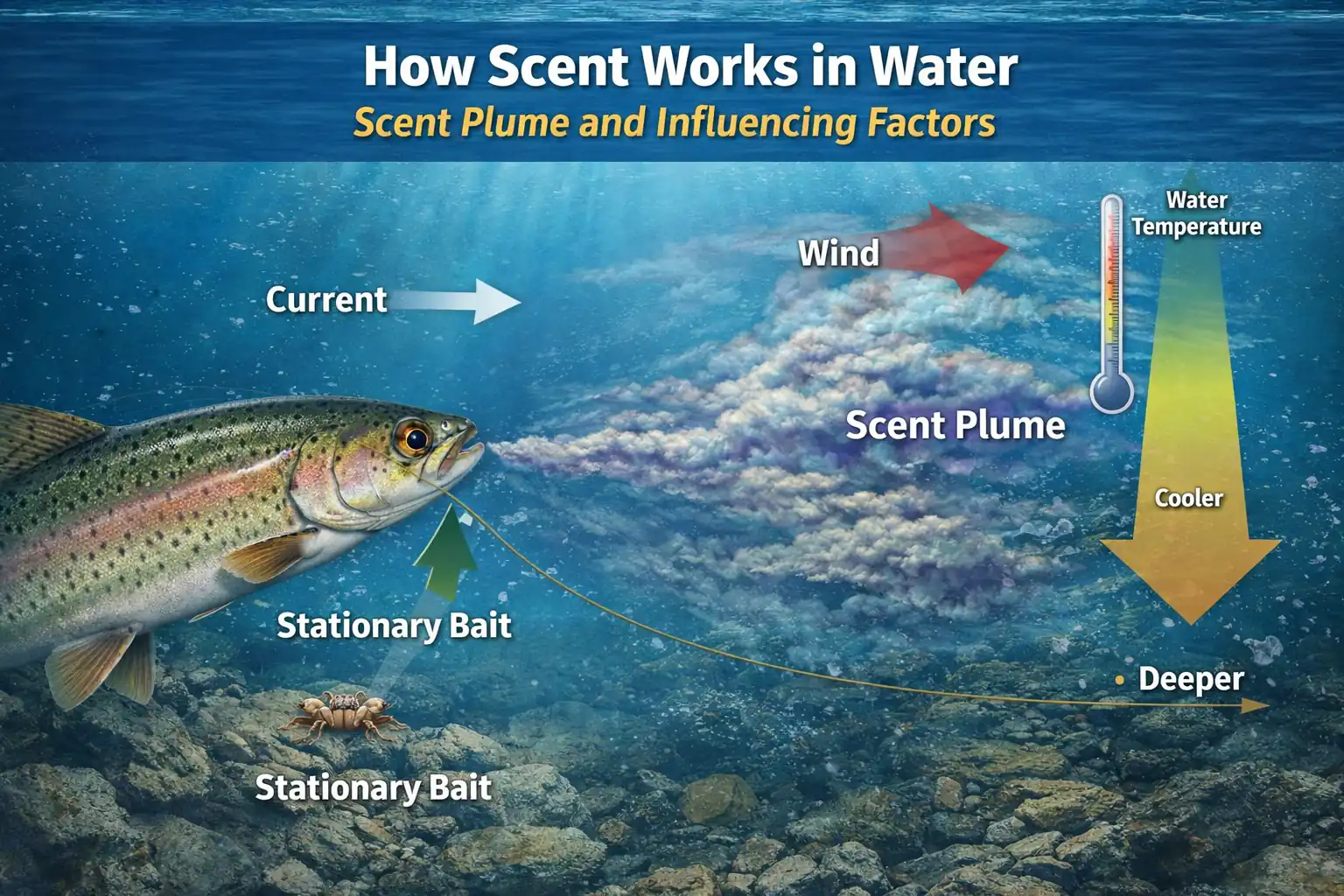
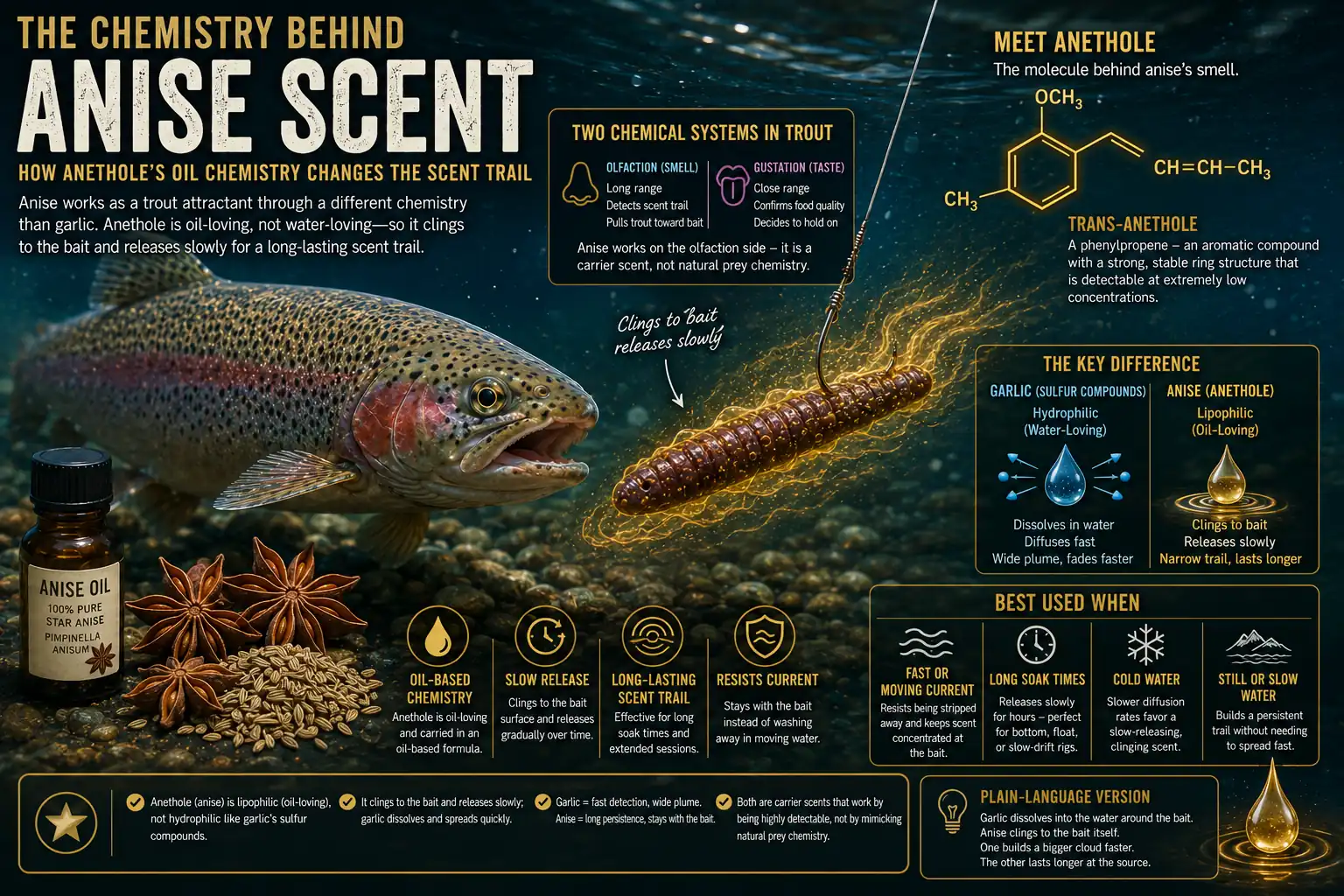
Trout have highly developed olfactory systems that detect dissolved chemicals, amino acids, proteins, and artificial scent compounds. This system operates continuously and does not depend on light. Why smell dominates in stocked trout: hatchery feeding reinforces scent association, trout are conditioned to follow odor trails, new environments reduce visual confidence.
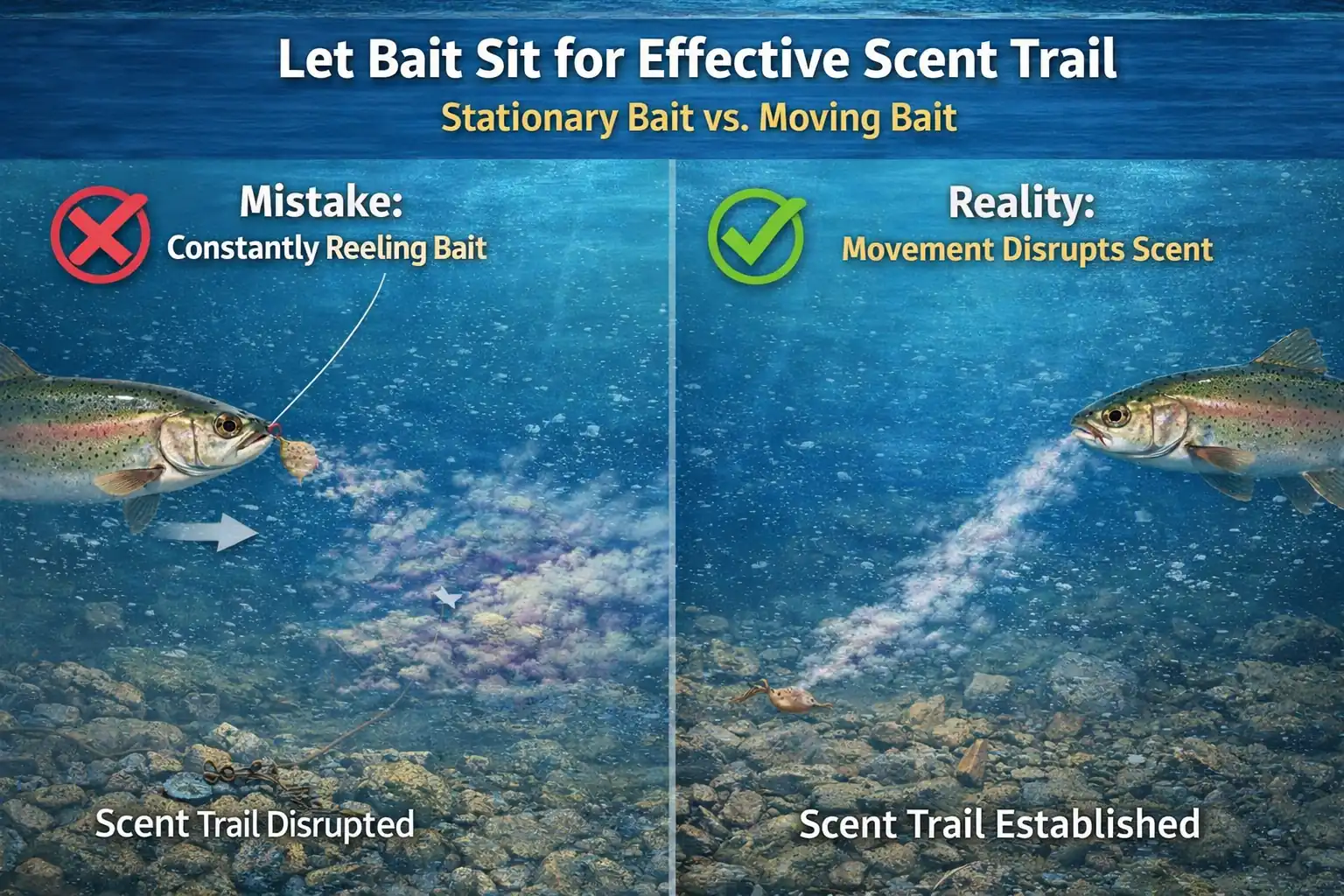
Scent does not spread evenly — it creates a plume influenced by current, wind, water temperature, and depth.
- When to prioritize scent: Murky/stained water, low light, cold water, recently stocked fish
- Tactical adjustment: Use high-scent bait, allow bait to remain stationary, position where scent can disperse effectively
- Common Mistake: Constantly reeling bait — movement disrupts scent concentration. Let bait sit long enough to establish a trail.
3. Vision: The Secondary but Precision System
Trout rely on vision for targeting food, evaluating size and shape, and triggering strike response. Vision is affected by water clarity, light penetration, and surface disturbance. Trout see best in clear water, at moderate light levels, and within short to mid-range distances.
- When vision becomes dominant: Clear water, bright daylight, after trout acclimate (48+ hours)
- Tactical adjustment: Use natural-looking bait, reduce size, improve presentation realism
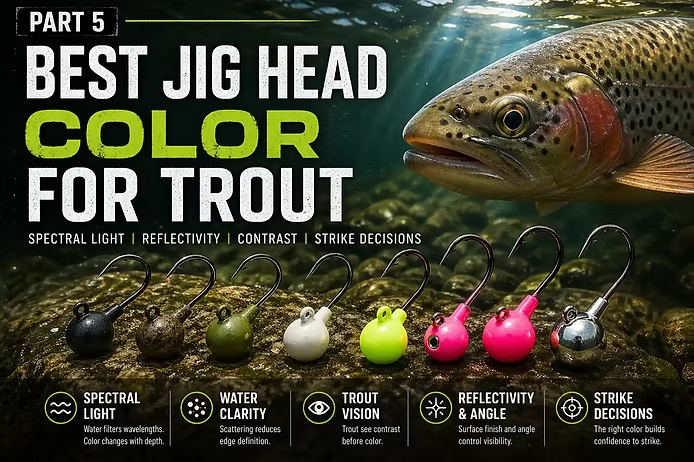
- Color vs Contrast: Trout respond more to contrast, visibility, and light reflection than to color as humans perceive it
- Common Mistake: Bright colors in clear water can reduce strikes — use muted or natural tones
4. Lateral Line: The Underused System
The lateral line detects water displacement, vibrations, and movement patterns. It allows trout to sense nearby movement, track objects without seeing them, and detect struggling prey. Early-stage stocked trout have limited use for feeding. Later-stage trout begin using vibration as a feeding cue.
- When to use vibration: After 48–72 hours post-stocking, low visibility conditions, when fish are more active
- Effective tools: Small spinners (slow retrieve), micro crankbaits, soft plastics with subtle tail action
- Common Mistake: Aggressive vibration early can spook or be ignored — introduce vibration gradually
5. Sensory Hierarchy
| Stage | Primary | Secondary | Tertiary |
|---|---|---|---|
| Early (0–48 hrs) | Smell | Vision | Vibration |
| Transition (48–72 hrs) | Smell | Vision | Vibration ↑ |
| Post-Adjustment | Vision | Vibration | Smell |
6. Environmental Control of Senses
| Condition | Primary Trigger | Strategy |
|---|---|---|
| Clear + bright | Vision | Natural bait, subtle movement |
| Murky | Smell | Strong scent, stationary bait |
| Low light | Smell/Vibration | Slow movement + scent |
| Cold water | Smell | Minimal movement |
7. Detection Distance and Strike Range
Stocked trout do not detect bait at long distances — detection range depends on water clarity, scent strength, and movement. Most strikes occur within a limited radius, often close to where trout are already holding. Common Mistake: Covering water too aggressively. Place bait where fish already are; focus on positioning, not searching.
8. Sensory Conflict: Why Trout Reject Bait
Trout often approach bait but do not strike because of sensory mismatch: visual confirmation says “possible food” but scent or texture says “not food.” Result: inspection without commitment, short strikes, missed hook-ups. To reduce rejection: match shape, maintain scent consistency, and avoid unnatural movement.
9. Integrating All Three Systems
- Early-stage setup: Dough bait, strong scent, no movement
- Later-stage setup: Small spinner, moderate vibration, natural appearance
10. Common Failure Points
- Using the wrong sense strategy — e.g. visual lure in murky water
- Ignoring environmental conditions, same setup everywhere
- Over-reliance on movement especially early after stocking
Key Takeaways
- Trout feed based on detection systems, not random behavior
- Smell dominates early and in low-visibility conditions
- Vision becomes critical in clear water and over time
- Vibration becomes effective after trout adapt
- Matching the dominant sense increases catch probability significantly
Previous: Stocked Trout Behavior: What Trout Actually Think Food Is
Next: Part 4 — Where Stocked Trout Actually Feed
Frequently Asked Questions About How Stocked Trout Find Food
Which sense do stocked trout rely on most right after stocking?
Smell is the dominant sense early on, since that’s what triggered feeding in the hatchery environment. This is exactly why scented baits often outperform unscented ones in the first 24 to 36 hours after stocking, before vision takes over as the more important system.
Do stocked trout use their lateral line to find bait?
Yes, though it’s an underused, secondary system compared to smell and vision. The lateral line detects vibration and water movement, which becomes more relevant as trout transition toward hunting natural forage and need to sense prey they can’t yet see or smell.
Why would a trout reject bait even after detecting it?
This usually happens when the sensory signals conflict — a bait that smells right but moves unnaturally, or looks right but lacks the scent trail the fish expects. When detection systems send mismatched signals, trout often hesitate or refuse rather than commit.