Stocked Trout Fishing Tips: Understanding the First 72 Hours After Stocking
Stocked trout fishing tips for the first 72 hours matter more than almost any other window — behavior shifts fast after release, and what works on hour one can stop working by hour forty.
Stocked Trout Fishing Tips for the First 72 Hours
Part 1 — Stocked Trout Are Not Wild Fish: Understanding the First 72 Hours After Stocking
Catching stocked trout in the first 72 hours is not random — it follows predictable behavioral patterns. The key to consistent success is matching your presentation to how trout behave at each stage. For the full breakdown of how color, depth, fall rate, and presentation all work together, see the → complete trout fishing system.
Quick System: Stocked Trout Fishing Tips for the First 72 Hours
- 0–24 hours: Stationary, scent-based bait. Fish within 10–30 feet of shore.
- 24–48 hours: Introduce slight movement. Combine scent with slow drift.
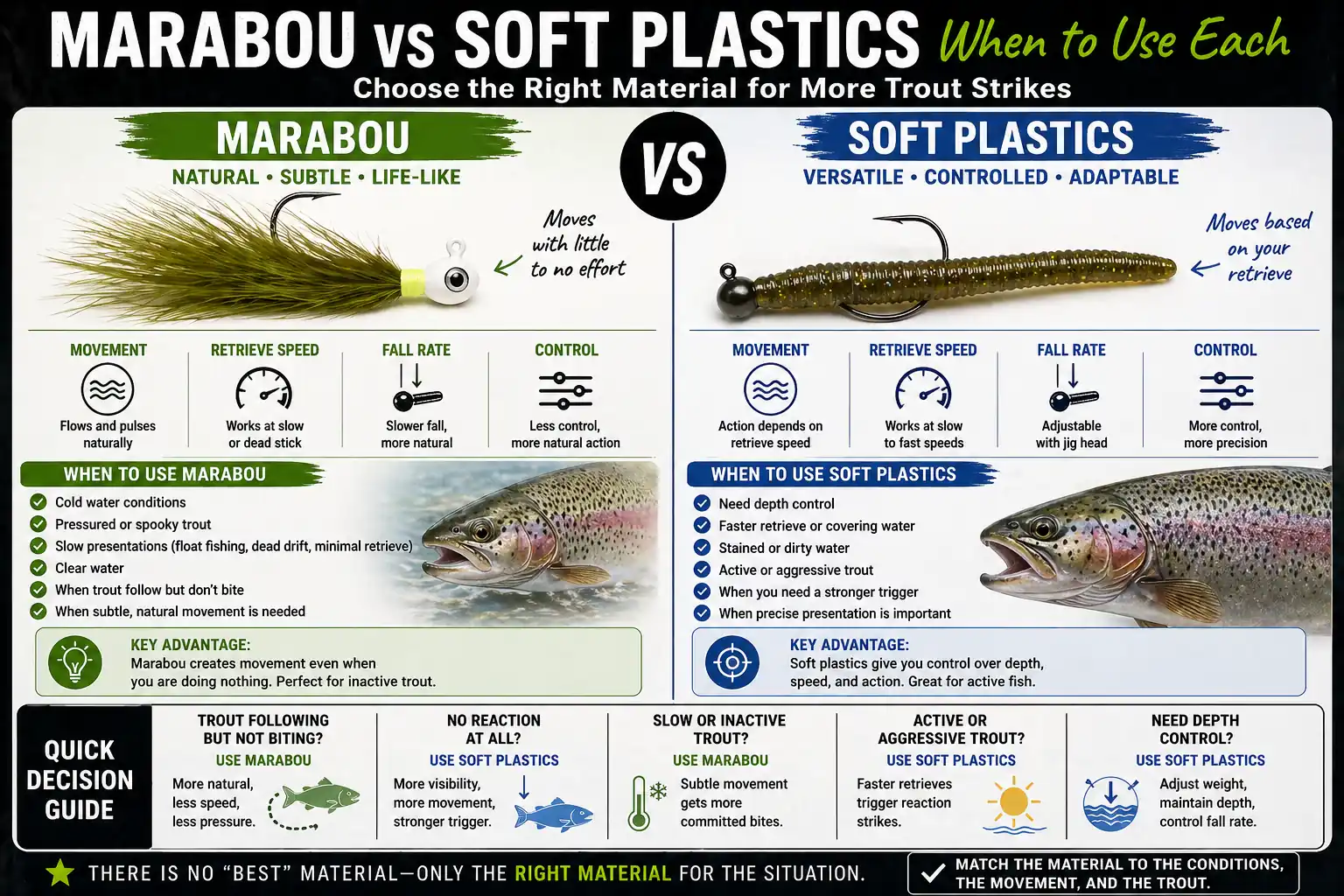
- 48–72 hours: Begin using slow-moving lures or soft plastics. Expand away from stocking point.
- Adjust depth before changing bait — most anglers fish too deep too soon.
1. What “Stocked Trout” Actually Are
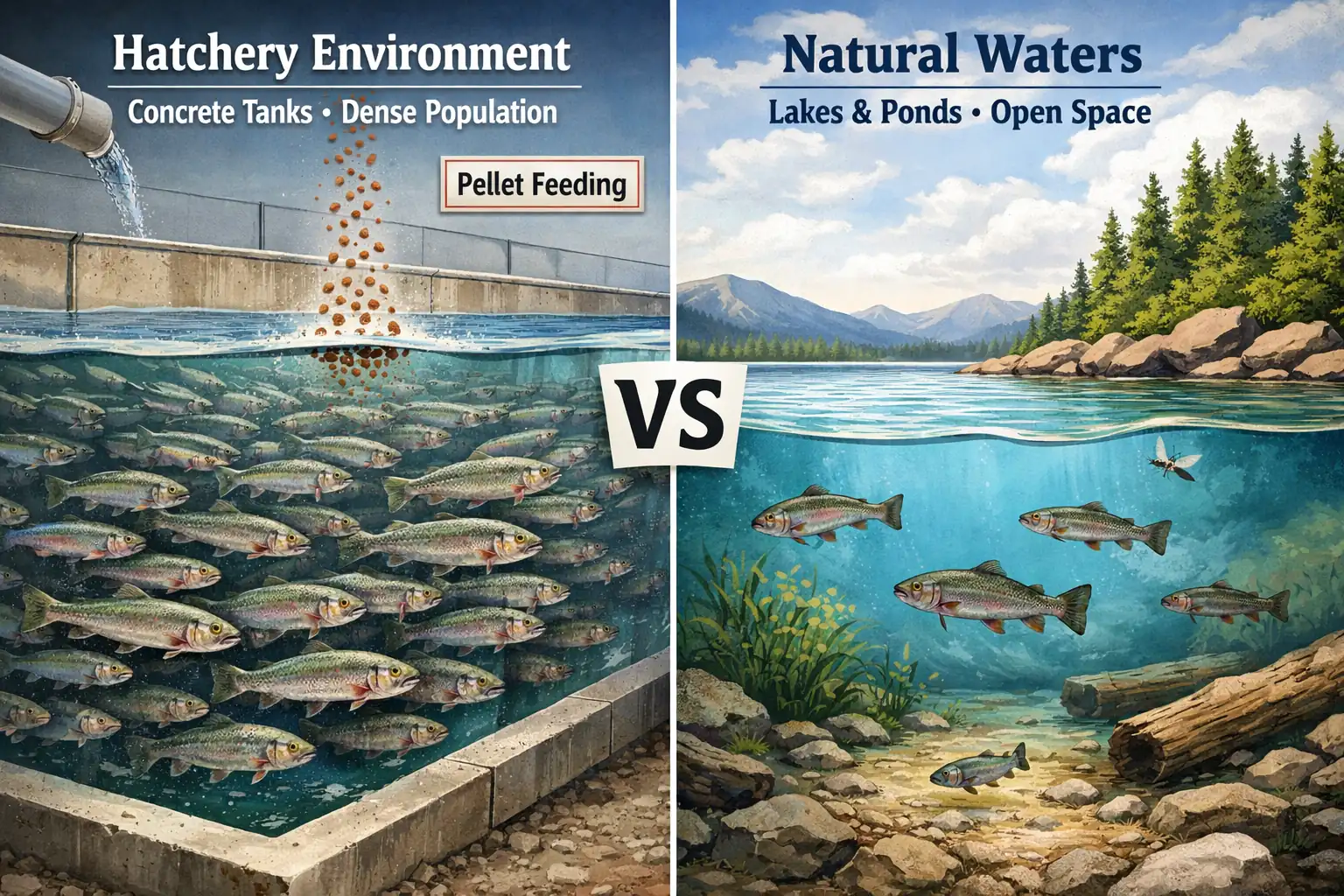
Stocked rainbow trout are not functionally equivalent to wild trout. They are raised in concrete raceways at high density on controlled feeding schedules. They are conditioned — unintentionally — to eat at specific times, recognize one type of food (pellets), and compete aggressively in tight groups. They are not trained to identify natural prey, avoid predators effectively, or navigate complex environments.
The Critical Feeding Rule
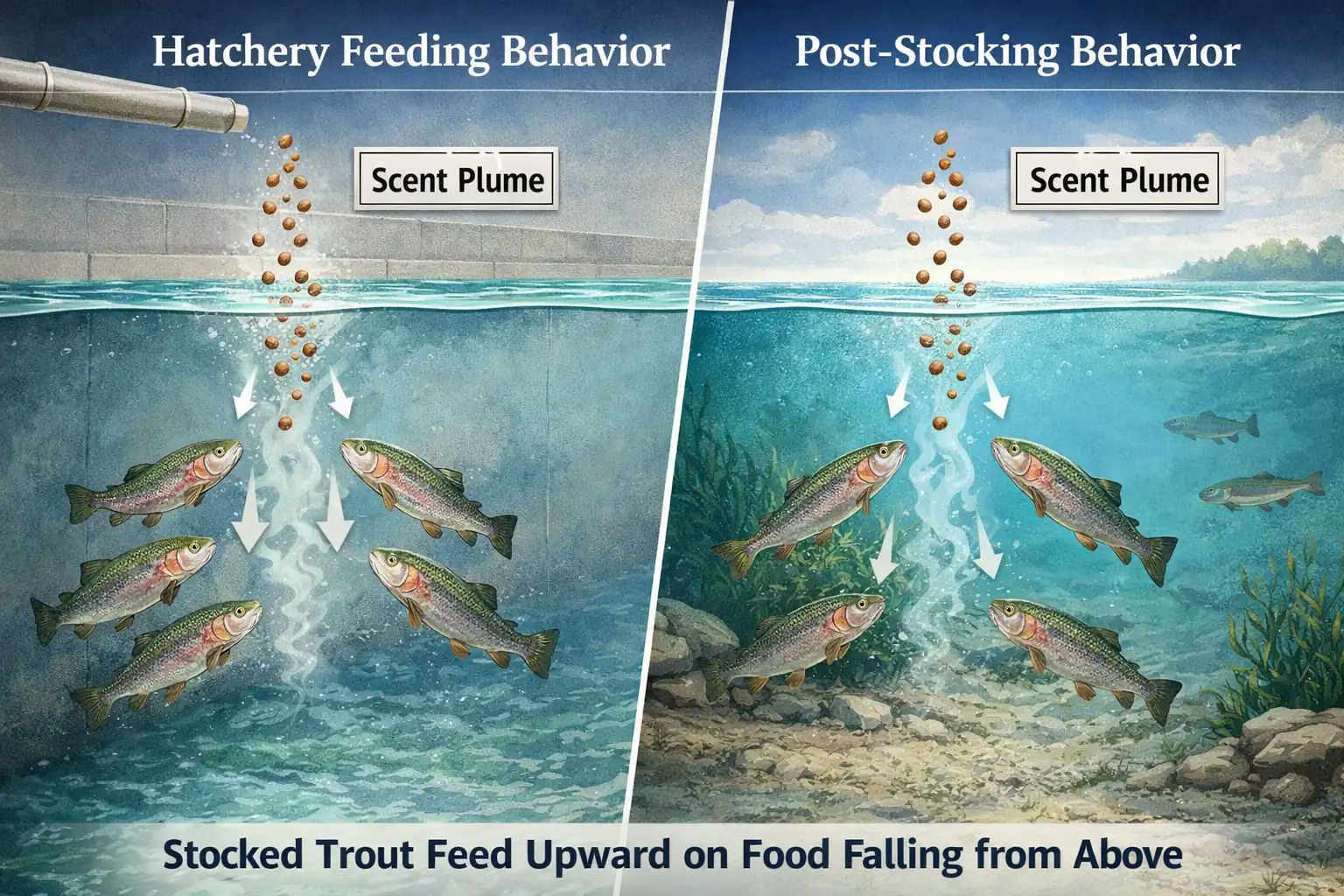
Hatchery trout learn a simple rule: Food appears from above, falls downward, and requires minimal effort to consume. This creates three immediate consequences after stocking: vertical feeding bias, low selectivity early on, and strong scent dependence. This is why floating or suspended baits outperform bottom-dragging lures early, dough baits work better than most artificial lures in the first 24–48 hours, and movement is often less important than presence.
2. The Stocking Event: Shock and Disorientation
Immediately after stocking, trout experience rapid environmental transition: transport stress, sudden release into unfamiliar water, and exposure to open space. They are disoriented, energy-conserving, and reacting rather than pursuing. They do not spread out immediately — they remain near the stocking point, hold in shallow or mid-depth water, and move slowly or suspend.
3. Where to Fish (First 24 Hours)
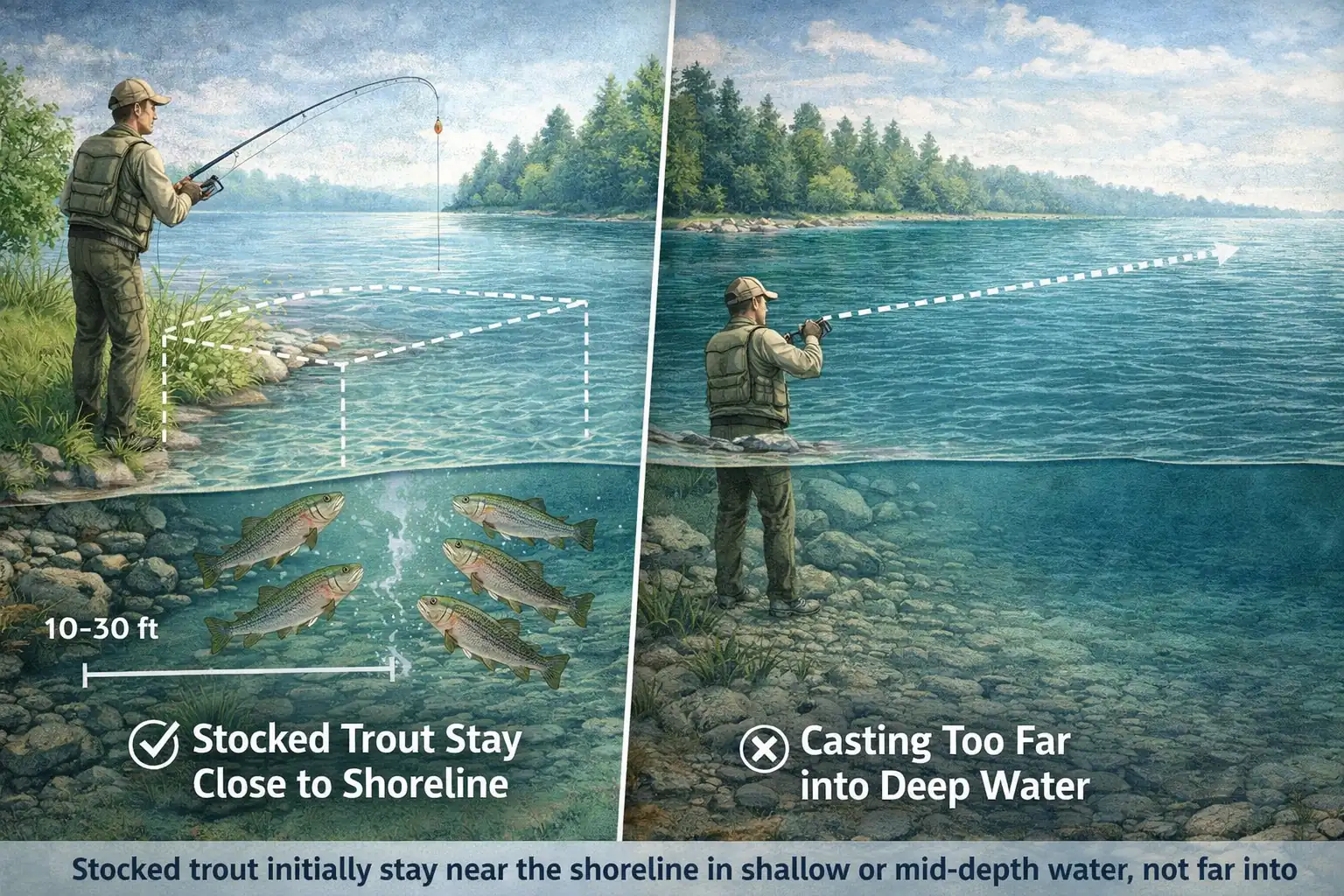
Most stocked trout stay within 10–30 feet of shore after release. Effective strategy: fish parallel to the shoreline, target visible cruising fish, focus on calm water zones near release areas. Common Mistake: Casting as far as possible into deep water. Shorten casting distance and fish parallel to the bank instead. → See: Where Stocked Trout Actually Feed
4. Depth and Positioning
Stocked trout suspend in the upper to mid water column — they avoid extreme depths initially. If using bait: keep it slightly elevated off bottom. If using floats: set depth between 1–4 feet initially. Common Mistake: Fishing directly on the bottom. Use floating bait or adjust leader length, and experiment upward before going deeper.
5. Movement vs Stillness (First 24–48 Hours)
Early-stage stocked trout show low chase behavior and limited aggression toward fast-moving lures. Lures depend on instinctive predation that stocked trout haven’t developed yet. Effective early approach: static bait, scent-driven presentations, transition to lures later. Common Mistake: Constantly moving bait — cast and let it sit long enough for trout to approach.
6. The 24–72 Hour Transition Phase
After the initial shock period: fish begin to spread out, feeding becomes more consistent, and curiosity increases. Introduce slow-moving lures, small spoons or spinners, and soft plastics with slight action. Shift from pure scent-based fishing to scent + movement combination. → See: What Trout Actually Think Food Is
7. Pressure Effects Begin Immediately
Day 1: High catch rates. Day 2–3: Noticeable decline. After: Behavior becomes more cautious. To maintain catch rates: move away from high-traffic areas, downsize bait, reduce noise and disturbance. Common Mistake: Fishing the exact stocking point days later — fish disperse and become less predictable.
8. Environmental Factors
| Condition | Strategy Adjustment |
|---|---|
| Clear water | Natural colors, subtle presentation |
| Murky water | Strong scent, bright colors |
| Cold water | Slow everything down |
| Warm water | Increase movement slightly |
9. Behavior Timeline
| Time After Stocking | Behavior | Best Strategy |
|---|---|---|
| 0–24 Hours | Disoriented, reactive | Stationary bait, strong scent |
| 24–48 Hours | Curious, adjusting | Slight movement, controlled drift |
| 48–72 Hours | Spreading out, selective | Slow lures, soft plastics |
Key Takeaways
- Stocked trout are conditioned, not instinct-driven early
- First 24 hours favor simple, stationary, scent-based approaches
- Movement becomes effective only after the adjustment period
- Most anglers fail by fishing too deep, moving bait too much, and casting too far
Next: Part 2 — What Stocked Trout Actually Think Food Is
Frequently Asked Questions About the First 72 Hours
What’s the very best time to fish right after stocking?
The first few hours after stocking are typically the most productive window, while trout are still disoriented and feeding readily near the release point. As hours pass, fish begin dispersing and growing more cautious, so getting there early matters.
Do stocked trout stay near the stocking point the whole first day?
Not for long. Trout begin dispersing from the release point within the first 24 hours, especially under fishing pressure, spreading into deeper water, current, and cover as they settle in. By 24 to 72 hours, they’re transitioning away from the stocking area entirely.
Should I fish differently on hour 3 versus hour 40 after stocking?
Yes. Early on, scent-first, high-visibility presentations near the surface tend to work well since fish are still shock-conditioned. By the 24 to 72 hour mark, trout have begun adjusting, so slower, more natural presentations and awareness of fishing pressure become more important.