.webp)
Best Jig Heads for Trout (Complete System Guide)
- Rodney Abel
- May 12
- 7 min read

Updated: May 18
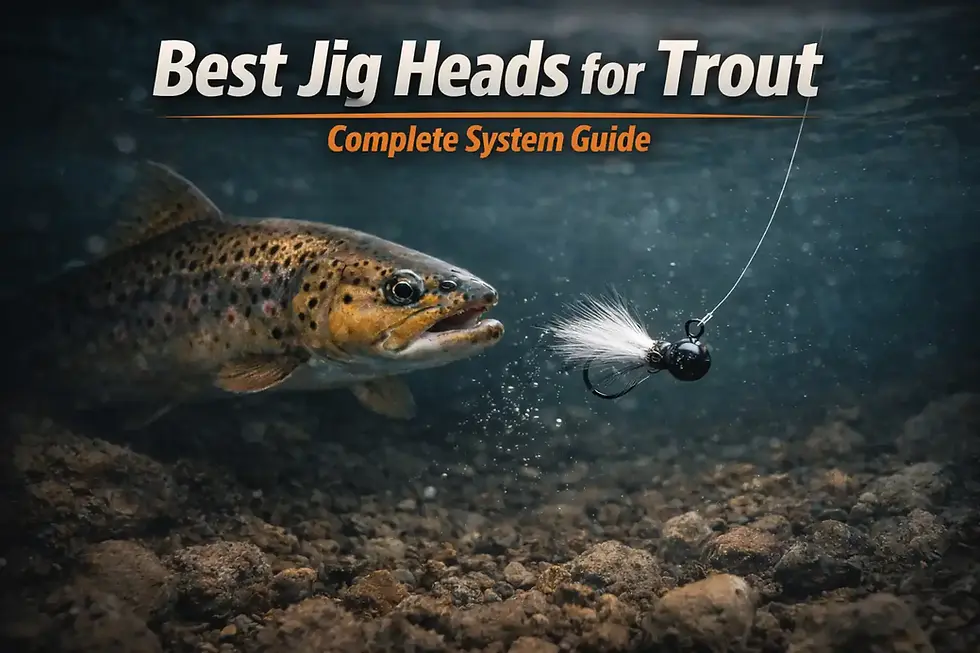
This is the complete system for selecting jig heads for trout fishing.
Jig head selection is one part of the larger trout presentation system.
For the complete breakdown of trout worms, fall rate, softness, visibility, and presentation mechanics, see:
Most anglers focus on one variable—usually weight or color—and ignore the rest. That leads to inconsistent results.
Trout respond to a combination of factors working together:
Weight (controls fall rate)
Head shape (controls movement and stability)
Hook size (controls hookup efficiency)
Eye angle (controls direction of pull)
Paint/finish (controls visibility)
When these are balanced correctly, the result is a controlled presentation that stays in the strike zone and produces consistent bites.
The Direct Answer (Start Here)
For most trout fishing situations:
Proven High-Performance Setups (Field + Production Data)
These are not theoretical—these are consistent top performers:
1/80 oz Round Head on #10 Sickle Hook
Primary finesse setup. Excellent for pressured trout, clear water, and slow presentations. Maximizes strike window and hookup efficiency.
1/32 oz Round Head on #8 Hook (Marabou Jigs/ Woolly Bugger Style Jigs)
Strong performer in slightly deeper water or light current. Provides better control while maintaining natural movement.
These two setups cover a large percentage of real-world trout conditions.
From here, adjustments are made based on conditions.
A. Jig Head Weight (Controls Fall Rate)
Weight is the most important variable.
Fall rate is one of the biggest factors controlling whether trout follow, commit, or refuse a bait. For the complete trout presentation system covering fall rate, worm action, and strike conversion, see:
It determines:
Sink speed
Time in strike zone
Drift behavior
Production Range
1/256 oz → 1/16 oz
Note: Some weights—especially 1/100 oz—function as transition points and may perform in more than one category depending on depth, current, and presentation speed.
Practical Breakdown
1/256 – 1/100 oz
Use when:
shallow water
ultra-clear conditions
pressured trout
Effect:
slow fall
extended strike window
1/100 – 1/80 oz (Primary Range)
Use when:
general conditions
light current
moderate depth
Effect:
balanced fall rate
natural drift with improved control
1/64 – 1/32 oz
Use when:
deeper water
moderate current
Effect:
faster sink rate
improved depth control
1/32 – 1/16 oz
Use when:
strong current
deep holes
Effect:
fast sink rate
Risk:
reduced strike window
lower bite conversion in neutral fish
Continue to Part 2
For a deeper breakdown of how weight controls fall rate, strike window, and depth positioning, see: Part 2 — How Jig Head Weight Affects Trout
B. Hook Size (Controls Hookup Efficiency)
Hook size determines how effectively trout are hooked and retained after the bite.
Range
Breakdown
best for micro plastics
higher bite conversion
requires controlled pressure to maintain hook hold on larger fish
most versatile
balanced performance
· larger plastics
· thicker wire diameter increases resistance to bending under load
· more secure hook hold during prolonged fights
Trade-off:
reduced bite conversion due to larger hook profile
Smaller hooks improve bite conversion, while larger hooks improve retention under load. The correct choice depends on fish behavior and pressure level.
Continue to Part 3 For a deeper breakdown of hook size, bite conversion, and retention, see: Part 3 — Best Hook Size for Trout Jigs
C. Head Shape (Controls Movement and Stability)
Head shape does not change weight—it changes how that weight behaves in the water.
Different head shapes do not just change appearance—they directly affect stability, tracking, and how naturally the lure moves through the water.
Head shape determines how water flows around the jig and how the lure behaves during the fall and retrieve.
Round (Ball Head)
stable
predictable fall
general-purpose use
Wedge Head
resists rolling
maintains orientation in current
improves drift consistency
Flat Head
promotes a stable, controlled fall
reduces rolling and unwanted rotation
creates a more consistent presentation through the water column
Minnow Head
directional movement
promotes forward tracking
enhances baitfish-style presentation
D2 Style
non-standard movement pattern
introduces variation in presentation
effective for pressured or conditioned fish
Continue to Part 4
For a deeper breakdown of how head shape affects movement, hydrodynamics, and presentation control, see: Part 4 — Best Jig Head Shapes for Trout
D. Eye Angle (Controls Direction of Pull)
Eye angle determines how the fishing line pulls the jig, which changes how it falls, drifts, and tracks through the water.
For trout fishing, eye angle is less about variety and more about maintaining a natural, controlled presentation.
90° Eye Angle (Primary Standard for Trout)
promotes a horizontal fall
minimizes forward movement
keeps the lure level in the water
Best for:
finesse presentations
suspended trout
slow or vertical presentations
Why it works: A vertical line pull keeps the jig from driving forward, allowing it to stay in the strike zone longer and move naturally with minimal input.
This is the most consistent and widely effective eye angle for trout fishing.
60° Eye Angle (Situational)
introduces slight forward movement
produces a more active drift
Use when:
fishing current
needing more forward tracking
Limitation: Can reduce presentation control compared to a 90° eye in finesse situations.
30° Eye Angle (Generally Not Ideal for Trout)
creates strong forward pull
increases speed and aggression
Use when:
targeting reaction strikes
fish are actively chasing
Limitation: Often too aggressive for pressured or neutral trout.
Key Principle
For trout, controlling movement is more important than creating movement.
Natural movement and controlled presentation are central to successful trout fishing. For a full breakdown of how trout respond to lure movement, softness, retrieve speed, and visibility, see:
Eye angles that reduce forward drive (like 90°) consistently produce more natural presentations and higher bite conversion.
Continue to Jig Geometry Guide
For a detailed breakdown of how eye angle and head shape control movement, fall behavior, and presentation, see: The Jig Head Angle and Geometry Guide
At Family Fishin, most trout jigs are poured with a 90° eye because it consistently produces the most natural and controlled presentation.
E. Paint and Finish (Controls Visibility)
Paint is a secondary factor.
Paint refines visibility, but it does not compensate for incorrect weight or poor presentation.
Natural Finishes
Use when:
clear water
pressured trout
Bright / High Contrast
Use when:
stained water
low light
Key principle:
Presentation matters more than color.
For more information see Part 5 — Does Jig Head Color Matter for Trout
F. Common Mistakes
Using jig heads that are too heavy
Ignoring current speed
Over-focusing on color
Mismatching hook size to plastic
G. Building a Complete Trout Jig System
Effective trout fishing requires combining variables:
Weight controls fall rate
Shape controls movement
Angle controls pull direction
Hook size controls hookups
Paint refines visibility
When these are balanced, the lure behaves naturally and stays in the strike zone longer.
For more information see Part 6 — How to Choose the Right Jig Head for Trout
These are the most common trout jig questions anglers ask when trying to improve fall rate control, strike conversion, and overall trout presentation.
Frequently Asked Questions About Trout Jig Heads
What is the best jig head weight for trout?
The best jig head weight for trout is usually between 1/100 oz and 1/64 oz for most situations. Lighter jig heads create a slower fall and more natural drift, while heavier jig heads help maintain depth control in current or deeper water. In pressured or clear water, lighter jig heads often produce more strikes because they stay in the strike zone longer.
For the complete trout presentation system covering fall rate, retrieve speed, and lure movement, see:
Is 1/32 oz too heavy for trout?
A 1/32 oz jig head is not always too heavy for trout, but it can reduce bite conversion in shallow water or when trout are pressured. Heavier jig heads sink faster and reduce the amount of time the lure stays in the strike zone. They work best in deeper water, moderate current, or windy conditions where additional control is needed.
What is the best jig head size for stocked trout?
For stocked trout, 1/100 oz to 1/64 oz jig heads are usually the most effective. These lighter weights create a slower, more natural presentation that helps convert followers into strikes. Small hooks between #10 and #8 also improve hookup efficiency with finesse trout worms and micro plastics.
What hook size works best for trout jigs?
Hook sizes between #10 and #6 cover most trout fishing situations. Smaller hooks improve bite conversion and pair well with finesse plastics, while slightly larger hooks provide better hook retention when using larger plastics or fighting bigger fish.
Are lighter jig heads better for trout?
In many situations, yes. Lighter jig heads create a slower fall rate, longer strike window, and more natural presentation. This is especially important in clear water, cold water, or heavily pressured fisheries where trout inspect the bait carefully before striking.
However, lighter jig heads may struggle in deeper water or stronger current where additional weight is needed to maintain depth control.
What jig head shape is best for trout?
Round (ball) heads are the most versatile and widely effective jig head shape for trout fishing. They provide a stable, predictable fall and work well with trout worms, marabou jigs, and finesse plastics.
More specialized shapes like wedge heads or minnow heads can improve drift stability or directional movement in certain conditions.
Does jig head color matter for trout?
Jig head color matters less than weight, fall rate, and presentation. In clear water, natural finishes often perform best. In stained water or low light, brighter colors and stronger contrast can improve visibility.
Most trout anglers get better results by adjusting weight and presentation before changing color.
Why do trout follow my jig but not bite?
When trout follow but refuse the bait, the issue is usually related to fall rate, movement, retrieve speed, or lure balance rather than color alone. Jig heads that are too heavy often create an unnatural presentation that causes trout to inspect but reject the lure.
For a deeper breakdown, see:
What is the best jig setup for trout worms?
One of the most consistent trout setups is:
This setup creates a balanced fall rate while maintaining natural worm movement at slow speeds.
What eye angle is best for trout jigs?
A 90° eye angle is generally the most effective for trout fishing because it creates a more level, controlled presentation with minimal forward pull. This helps the lure stay in the strike zone longer and move naturally through the water column.
60° eye angles can work well in current, while aggressive 30° angles are usually less effective for pressured trout.


Comments