Best Trout Worm Colors for Each Season (Clear & Stained Water Guide)
Best trout worm colors for each season shift with three forces — flow, sunlight, and metabolism — that change from spring through winter and decide which shade actually gets bit.
Best Trout Worm Colors for Each Season, Explained
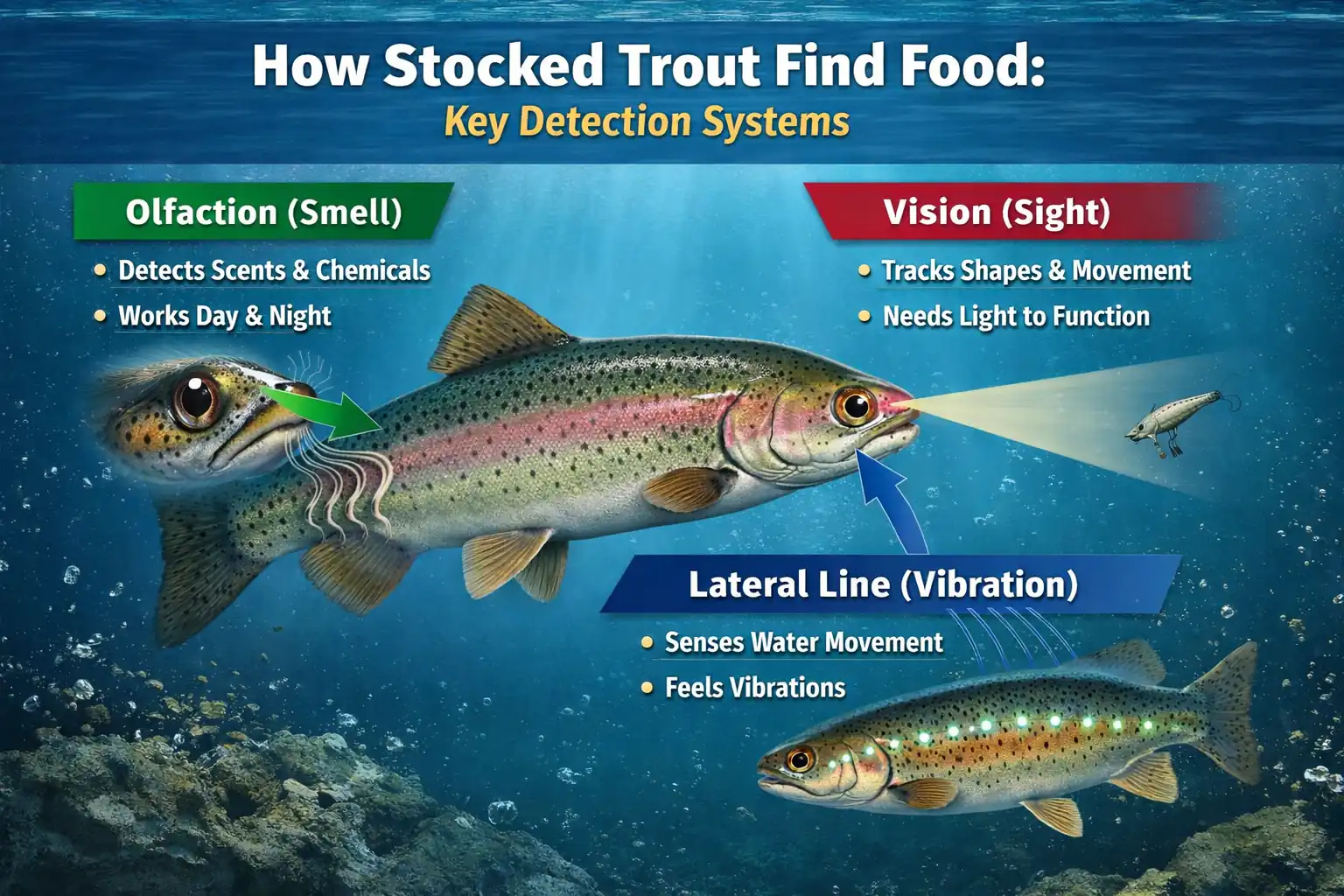
Most trout anglers overthink color — or worse, pick it randomly. In reality, selecting the best trout worm colors becomes predictable when you understand three variables: water clarity, light penetration, and seasonal forage behavior.
The Three Forces That Control Color Performance
- Water Clarity: Natural pastels in clear water; high contrast in stained conditions
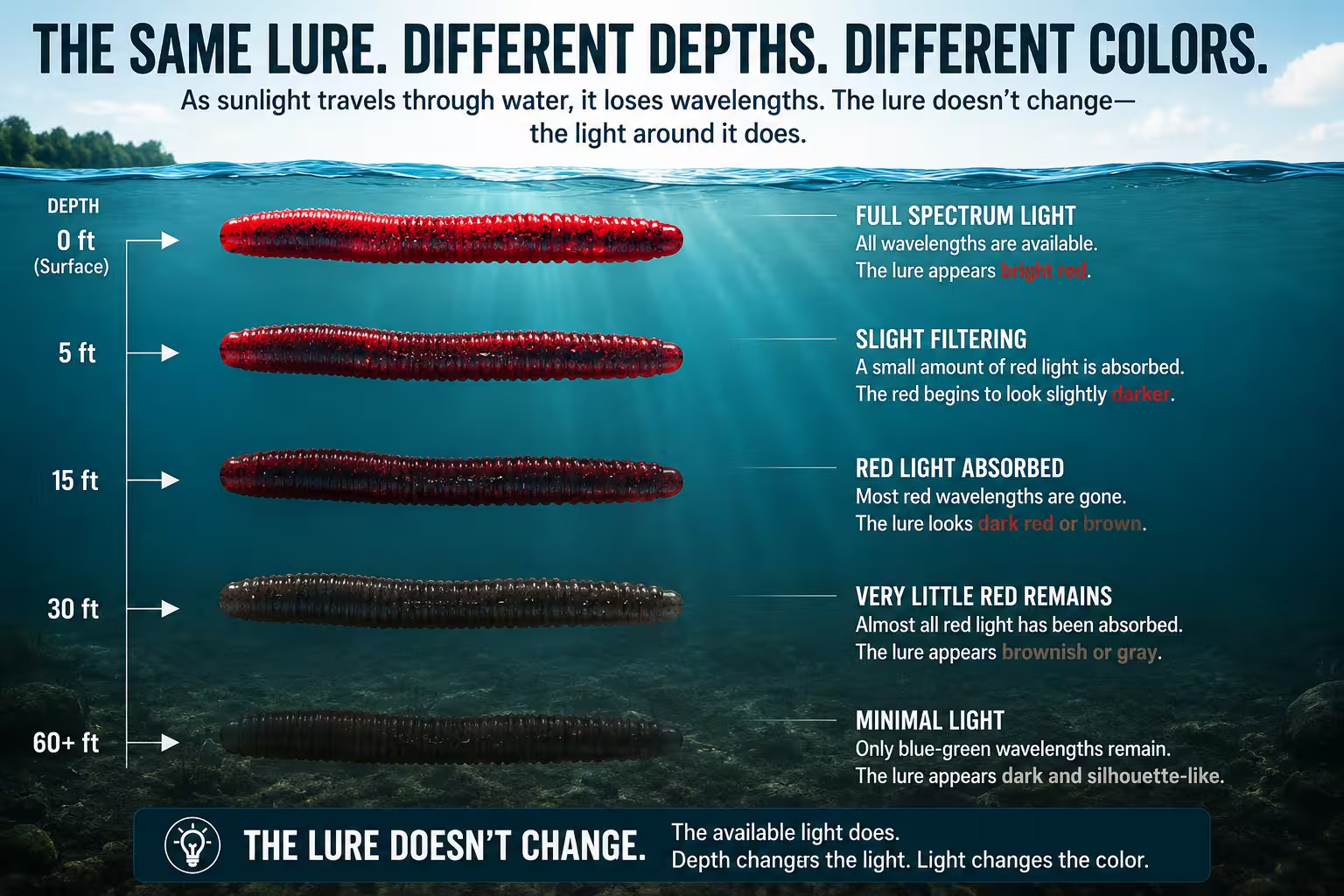
- Light Angle and Depth: Red wavelengths filter out first in deep pools; dark silhouettes outperform flash at depth
- Seasonal Forage Shifts: Spring = insect emergence; Summer = baitfish; Fall = transition forage; Winter = compressed metabolism
Spring: High Flow & Insect Emergence
| Water | Top Colors | Top Two-Tone | Notes |
|---|---|---|---|
| Clear (>8 ft vis.) | Peach, Mint Green | Root Beer | Match midge and mayfly pupae in riffles |
| Stained (4–8 ft) | Pink, Chartreuse | Avocado Snake | Punch through green tint |
| Muddy (<4 ft) | Orange, Hot Pink | Orange/White | Short-wave brilliance cuts runoff |
Summer: Bright Sun & Baitfish Feeding
| Light | Top Colors | Top Two-Tone | Notes |
|---|---|---|---|
| Bright Sun, Clear | Gold, White | Root Beer | Flash like shiners; match baitfish |
| Overcast/Stained | Chartreuse, Red | Sneaky Snake | UV pop in murky water |
| Deep Holes (>8 ft) | Red, Chartreuse | Root Beer | Red penetrates; UV pulses below |
Fall: Cooler Temps & Aggressive Windows
| Habitat | Top Colors | Top Two-Tone | Notes |
|---|---|---|---|
| Riffles, Shallows | Peach, Gold | Avocado Snake | Late-season insects and small fry |
| Deep Pools | Red, Nightcrawler | Sneaky Snake | Silhouette contrast in low light |
| Transition Zones | White, Mint Green | Root Beer | Flash and subtle hatch match |
Winter: Low Light & Slow Metabolism
In winter, silhouette often outperforms flash. Dark profiles dominate in low-light windows.
| Light | Top Colors | Top Two-Tone | Notes |
|---|---|---|---|
| Low-Light | Nightcrawler, Black | Sneaky Snake | Silhouette priority |
| Daylight, Clear | White, Gold | Root Beer | Flash draws lethargic fish |
| Icy Runs | Red, Chartreuse | Orange/White | UV flash through winter runoff |
Get These Colors — Ribbed Trout Worm
Every color in this guide — Root Beer, Sneaky Snake, Avocado Snake, Peach, Mint Green, and the rest — is a real color option on our Ribbed Trout Worm, hand-injected here in the Ozarks. Pick the color that matches your season and water clarity above, choose a scent, and it ships ready to fish.
FAQ
What color works best in muddy water?
High-contrast colors — dark silhouettes like black or nightcrawler create strong outlines, while UV-rich hues like chartreuse or pink increase visibility in stained water.
What color works best in clear water?
Natural pastels, translucent tones, and subtle two-tone combinations. Trout inspect baits longer in clear water — minimize unnatural contrast.
→ Complete Trout Fishing System | → How Water Clarity Changes Trout Vision
More Questions About Seasonal Trout Worm Colors
Why does spring call for different colors than summer?
Spring often brings higher flow and active insect emergence, which favors colors that stand out in moving, sometimes off-color water. Summer’s brighter sun and more active baitfish feeding shift the balance toward natural tones that hold up under stronger light without looking unnatural.
Do fall colors really need to be more aggressive?
Cooling temperatures in fall often trigger more aggressive feeding windows as trout prepare for winter, which can support bolder color choices than the caution of late summer. It’s less about the season itself and more about the aggressive feeding behavior that fall temperatures tend to produce.
Why do winter colors need to account for slow metabolism?
Cold water slows trout metabolism and activity, and low light conditions common in winter reduce visibility overall. Colors that work with subtle, low-effort presentations — rather than bold colors meant to trigger reaction strikes — tend to match how winter trout are actually willing to feed.
Should I keep a different worm color for every season in my tackle box?
A small rotation covering natural, bright, and dark tones handles most seasonal shifts without requiring a color for every possible condition. Pay closer attention to water clarity and fish activity on a given day than to the calendar date alone, since conditions don’t always match the season perfectly.
How quickly should I change colors if a seasonal choice isn’t working?
Give a color a fair test across a handful of casts and locations before switching, but don’t stay married to a seasonal “rule” if the water conditions on a given day don’t match the typical pattern for that time of year. Direct observation should override a general seasonal guideline.
Does the ribbed trout worm come in colors suited to each season?
Yes — the ribbed trout worm is offered in a range of natural, bright, and dark tones built to cover clear-water spring and summer conditions through the bolder, more aggressive presentations that fall and stained water often call for.
Is stained water color guidance the same across all four seasons?
The core principle stays consistent — brighter, higher-contrast colors for visibility — but how aggressive you go can still shift with season. Stained water in an aggressive fall feeding window may call for bolder colors than the same water clarity would in a slower winter period.