.webp)
Marabou vs Soft Plastics for Trout (When to Use Each for More Strikes)
- Rodney Abel
- Apr 29
- 3 min read

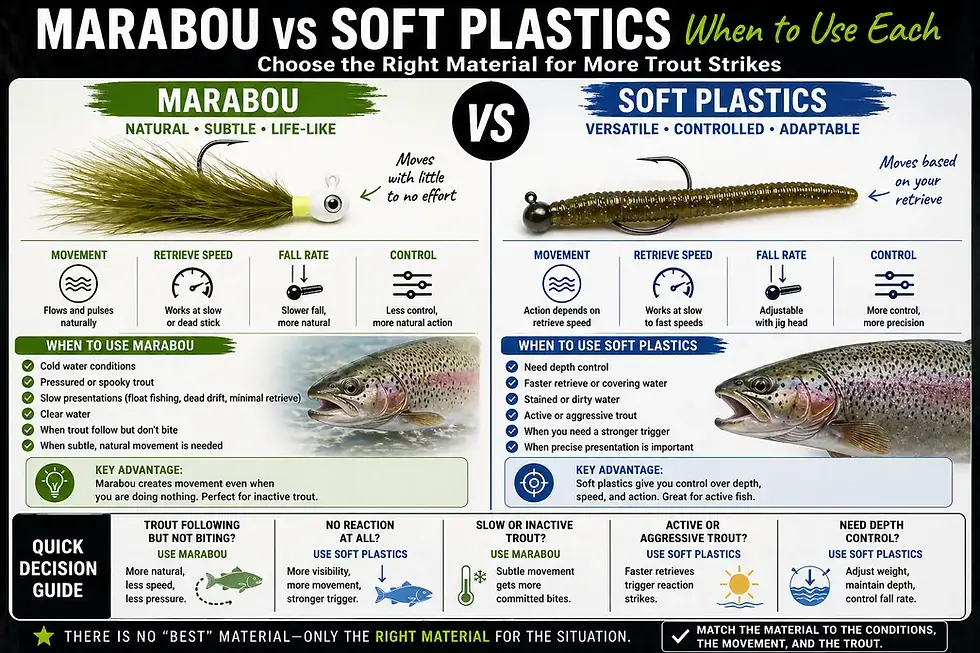
When to Use Marabou vs Soft Plastics
(Choosing the Right Material for Trout Fishing)
Understanding marabou vs soft plastics for trout fishing is critical because each material behaves differently and triggers different strike responses.
Most anglers switch randomly between the two.
But the correct approach is:
match the material to conditions, movement, and trout behavior
When you choose correctly:
presentations look natural
trout commit faster
strike conversion increases
This guide is part of a complete trout fishing system that explains how material, movement, fall rate, and visibility work together.
Why Material Choice Matters
Marabou and soft plastics are not interchangeable.
They behave differently in:
movement
fall rate
water resistance
strike response
If you use the wrong material:
trout may follow but not bite
presentation may look unnatural
you lose control over the strike window
Marabou vs Soft Plastics for Trout: Key Differences
Marabou (Passive Movement)
Marabou creates motion without needing retrieve speed.
fibers pulse naturally
movement occurs with minimal water flow
extremely subtle
Best for:
slow presentations
cold water
pressured fish
Soft Plastics (Controlled Movement)
Soft plastics require input to create action.
movement depends on retrieve speed
fall rate can be tuned
more predictable
Best for:
depth control
structured presentations
varied retrieve styles
When to Use Marabou for Trout
Cold Water Conditions
Trout conserve energy.
Marabou works because:
it moves without effort
it matches slow-moving prey
Soft plastics often fail here because:
they require speed to activate
Pressured Trout
Trout become selective and cautious.
Marabou:
appears more natural
reduces hesitation
increases commitment
Slow or Still Presentations
Marabou excels when:
fishing under a float
dead drifting
minimal retrieve
Key Advantage
Marabou produces movement even when you are doing nothing.
When to Use Soft Plastics for Trout
Depth Control Situations
Soft plastics allow you to:
control fall rate
maintain depth
adjust presentation precisely
Faster Retrieve Conditions
When trout respond to movement:
Soft plastics:
provide consistent action
respond to retrieve speed
→ See: Retrieve Speed for Trout Fishing
Covering Water
Soft plastics are better when:
searching for fish
moving quickly between areas
Key Advantage
Soft plastics allow controlled, repeatable presentations.
How Trout Behavior Determines the Choice
Trout Following But Not Biting
This often indicates:
presentation is close
but not natural enough
Switch to:
marabou
It reduces:
speed
unnatural movement
Trout Not Reacting at All
This often indicates:
lack of visibility
insufficient trigger
Switch to:
soft plastics
They provide:
more presence
stronger movement
Aggressive Trout
Use:
soft plastics
They trigger:
reaction strikes
fast commitment
Neutral or Inactive Trout
Use:
marabou
It creates:
subtle movement
natural presentation
Marabou vs Soft Plastics in Different Conditions
Clear Water
trout inspect longer
Best:
marabou
subtle plastics
Stained Water
reduced visibility
Best:
soft plastics
stronger profile
Cold Water
Best:
marabou
Warm Water
Best:
soft plastics
High Pressure
Best:
marabou
Low Pressure
Best:
soft plastics
Movement vs Control (Critical Tradeoff)
This is the real decision point.
Marabou
maximum natural movement
minimal control
Soft Plastics
maximum control
movement depends on input
Common Mistakes
Avoid:
using soft plastics in cold, slow conditions
using marabou when depth control is critical
not adjusting based on pressure
choosing based on confidence instead of conditions
The Real Pattern
Most anglers think:
marabou vs plastics = preference
In reality:
material determines movement—and movement determines strikes
If trout are not committing:
the wrong material is often the problem
Final Breakdown
Use marabou when:
trout are slow
fish are pressured
presentation needs to be subtle
Use soft plastics when:
you need control
fish are active
covering water
Summary
Marabou and soft plastics solve different problems.
Marabou:
natural movement
slow conditions
high conversion
Soft plastics:
controlled presentation
adaptable
strong trigger
When you choose the correct material:
To understand how material choice fits into the full approach, see the
you match how trout expect prey to behave


Comments